A Weekend Escape from Munich to Salzburg
Salzburg had been on my list for a while, so I decided to take a short trip from Munich to this beautiful Austrian city. What made the trip even better was that I was able to combine public transportation, a guest mobility ticket from my accommodation, sightseeing, historic landmarks, and even a mountain adventure at Untersberg.
From the moment I arrived, Salzburg felt like a city straight out of a storybook — beautiful Baroque buildings, narrow historic streets, church towers, the Salzach River, and mountains rising dramatically in the background.
🚆 From Munich Hauptbahnhof to Salzburg Hauptbahnhof
I started my journey at Munich Hauptbahnhof, taking the train toward Salzburg Hauptbahnhof.
For my journey, I used my Deutschland-Ticket. It was convenient because I didn’t have to purchase another local ticket for the part of my journey that was covered by my ticket.
After arriving at Salzburg Hauptbahnhof, I continued by bus toward my Airbnb. My accommodation was approximately 15 minutes by bus from Salzburg Hauptbahnhof, which made getting around the city quite easy.
One of the useful things I received from my Airbnb host was the Salzburg Guest Mobility Ticket. Today, overnight guests in the province of Salzburg receive this ticket, which allows free use of public transportation throughout Salzburg during their stay. This is separate from the Salzburg Card, which is primarily designed for sightseeing and attraction admission.
🎟️ My Salzburg Cards
For sightseeing, I also purchased a 24-hour Salzburg Card.
The Salzburg Card can be particularly useful if you plan to visit several attractions because it includes one-time free admission to many museums and attractions, as well as additional benefits. The Fortress and its funicular are among the attractions included with the card.
Travel Tip: If you’re planning to visit several paid attractions in one day, compare the individual entrance prices with the Salzburg Card before buying it.
🏡 Checking In & My First Afternoon in Salzburg
After arriving at my Airbnb, I checked in, settled my things, and decided to take a short nap.
After traveling from Munich, I needed a little rest before exploring the city.
By the afternoon, I was ready to go.
I headed out and started wandering around Salzburg’s historic center. There was something special about simply walking through the streets without rushing from one attraction to another.
The city has a wonderful combination of historic architecture, elegant squares, churches, traditional cafés, and mountain views.
And this was only the beginning.
🏰 Day 2: Hohensalzburg Fortress
The following morning, I woke up early because I wanted to make the most of my day.
My first major destination was Hohensalzburg Fortress, one of Salzburg’s most famous landmarks.
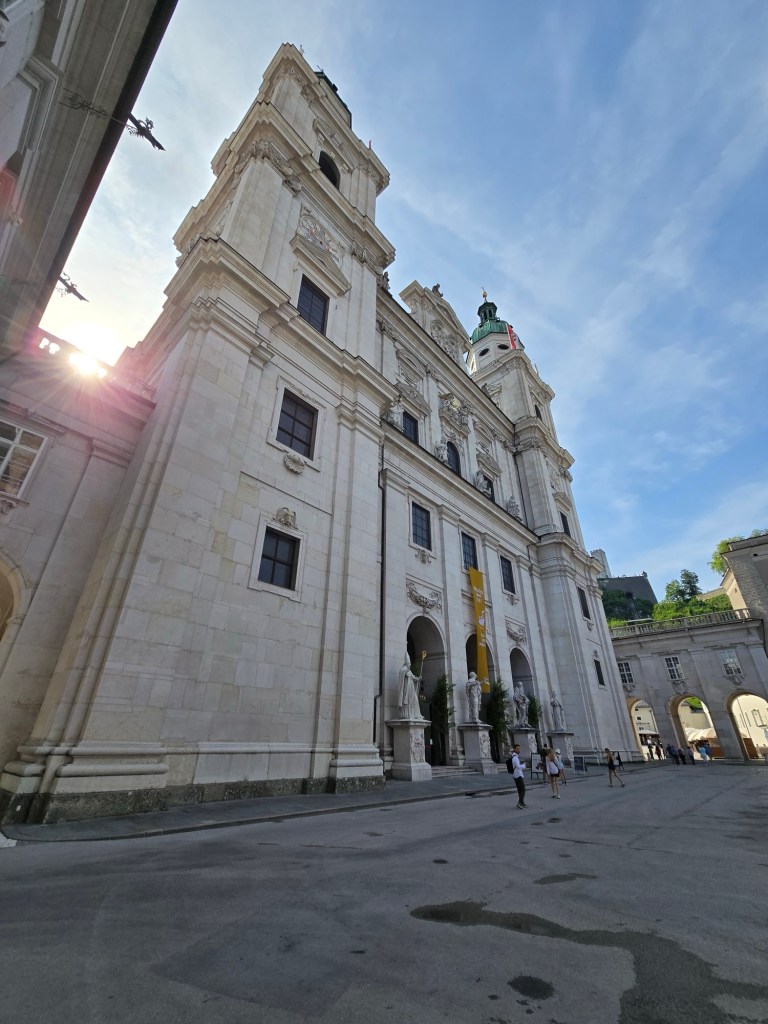
On my way, I passed by Salzburg Cathedral, or Salzburger Dom.
⛪ Salzburg Cathedral
The cathedral is one of the most impressive buildings in Salzburg’s historic center. It is closely connected with the city’s musical heritage, and concerts and musical performances are held here.
I didn’t go inside during this visit, although from the outside I could already imagine how grandiose the interior must be.
The cathedral is also one of the important landmarks surrounding Salzburg’s historic center, which has been a UNESCO World Heritage Site since 1996.
🚋 Riding the Fortress Funicular
From the cathedral area, I continued toward the entrance of Hohensalzburg Fortress.
I lined up to get my ticket and experience the famous FestungsBahn, the funicular railway that climbs directly toward the fortress.
The ride itself was short but incredibly scenic.
As the funicular climbed, Salzburg gradually opened up below me. The rooftops of the Old Town became smaller, while the Salzach River stretched through the city.
The ride takes only a few minutes, and suddenly you find yourself high above Salzburg.
One important tip: the Fortress railway is not covered by the Guest Mobility Ticket, but the Salzburg Card includes one free ride.
🏰 Exploring Hohensalzburg Fortress
Arriving at the top felt like stepping into another era.
Hohensalzburg Fortress sits high above Salzburg on the Festungsberg and is one of the city’s most recognizable landmarks. It is also the largest fully preserved castle complex in Central Europe.
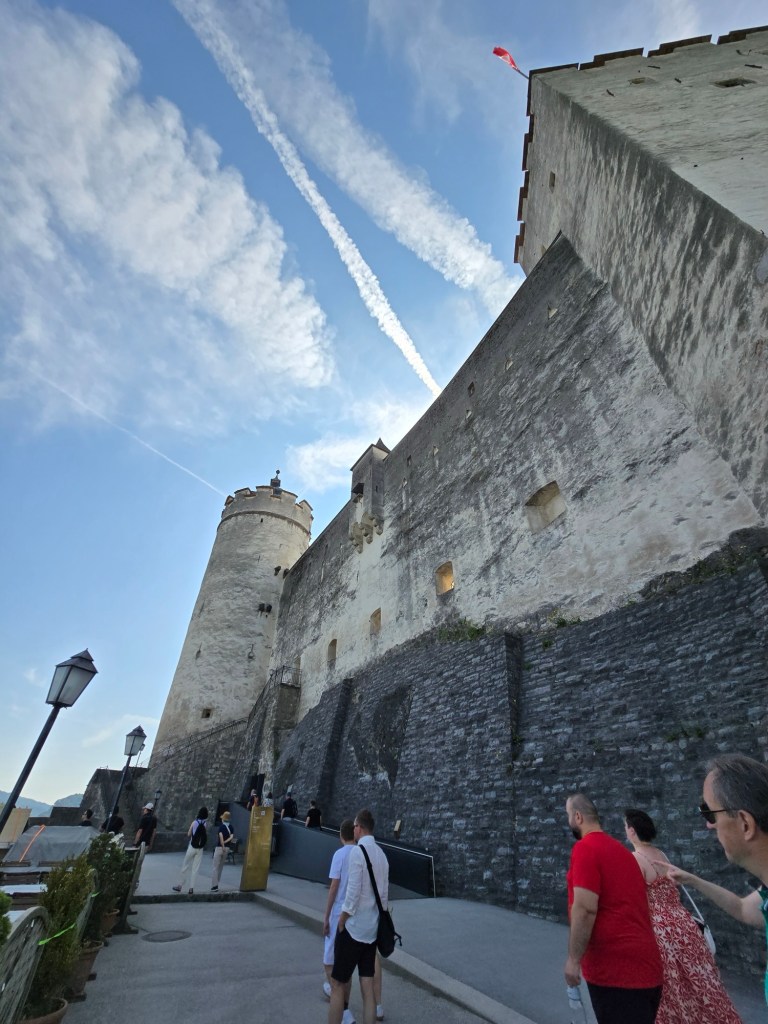
Construction began in 1077 under Archbishop Gebhard, and the fortress was expanded considerably over the following centuries. Around 1500, under Archbishop Leonhard von Keutschach, it reached much of the form we see today.
One fascinating fact is that the fortress was built primarily to protect Salzburg and its prince-archbishops from attack — and throughout its history, it was never captured by foreign troops.
Inside the fortress, there is plenty to explore, including:
- The Fortress Museum
- The Rainer Regiment Museum
- The Marionette Museum
- The historic armory
- The Gothic Prince’s Rooms
- The Golden Hall
- The Golden Chamber
- The fortress courtyards and bastions
- The Panorama Tour
The historic Prince’s Rooms are particularly fascinating because much of their decoration has remained essentially unchanged since 1501–1502. The Golden Chamber even contains a striking Gothic tiled stove and a ceiling decorated to resemble a night sky.
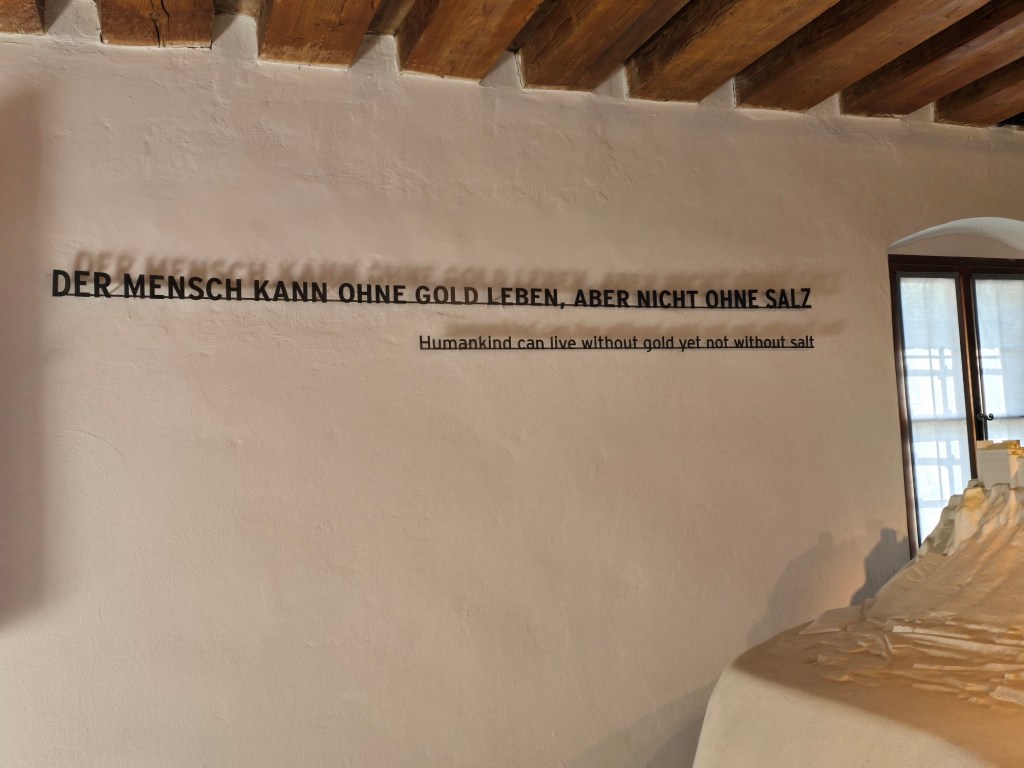
🌄 The Amazing View from Hohensalzburg
But for me, one of the best parts of visiting the fortress was the view.
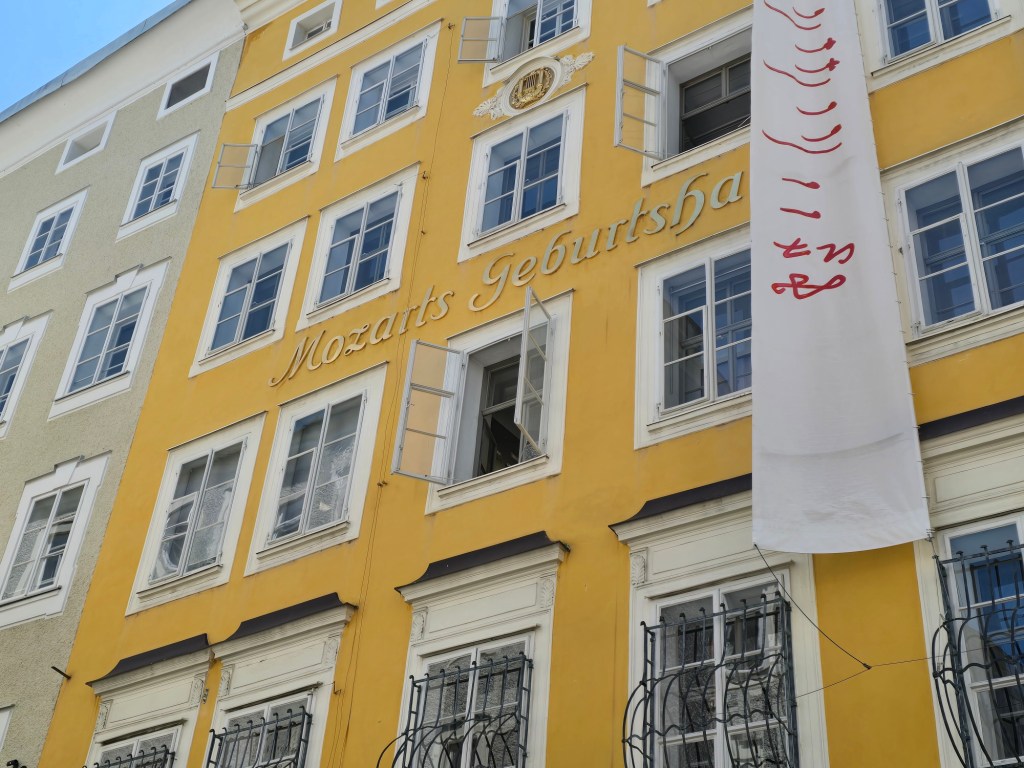
Located at Getreidegasse 9, this is the house where Wolfgang Amadeus Mozart was born on January 27, 1756.
From up here, Salzburg seemed to stretch endlessly below me.
Looking toward the city, I could see the historic Old Town, with Salzburg Cathedral standing prominently among the rooftops. The Salzach River cut through the city, while the surrounding hills and mountains formed a dramatic backdrop.
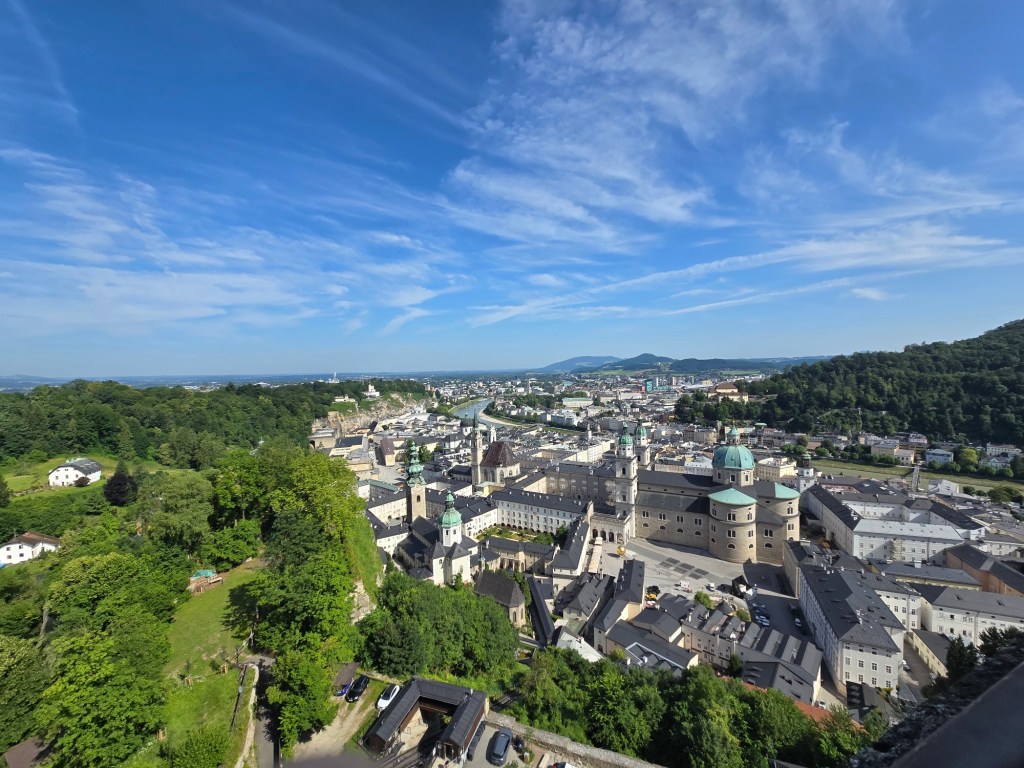
From the higher panorama areas, you can enjoy a 360-degree view of Salzburg and its surroundings. The Panorama Tour leads to the observation platform of the Reckturm, which is considered one of the best viewpoints in the city.
On a clear day, the panorama extends far beyond the city, with the surrounding Alpine landscape becoming part of the experience.
I could have stayed there for a long time just taking in the view.
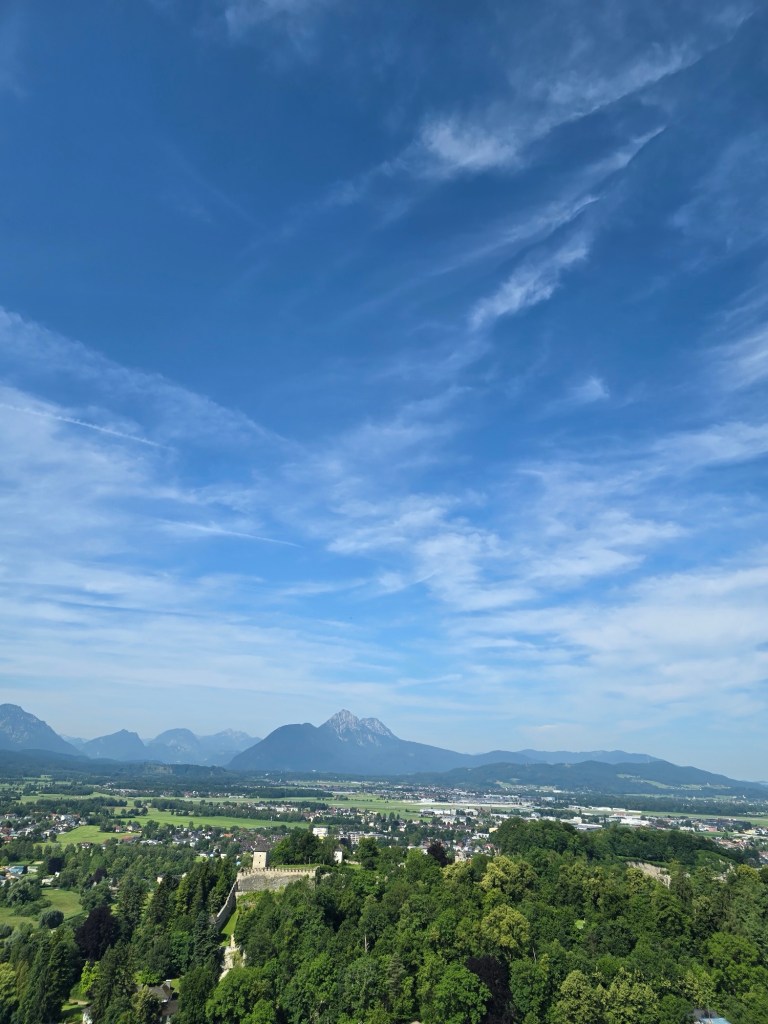
in Hohen Salzburg
🚶 Walking Down from the Fortress
After spending time exploring the fortress, I decided to walk down rather than immediately take the funicular.
The path on the other side was just as beautiful.
Walking downhill gave me a completely different perspective. Instead of looking at Salzburg from above, I slowly became part of the historic city again.
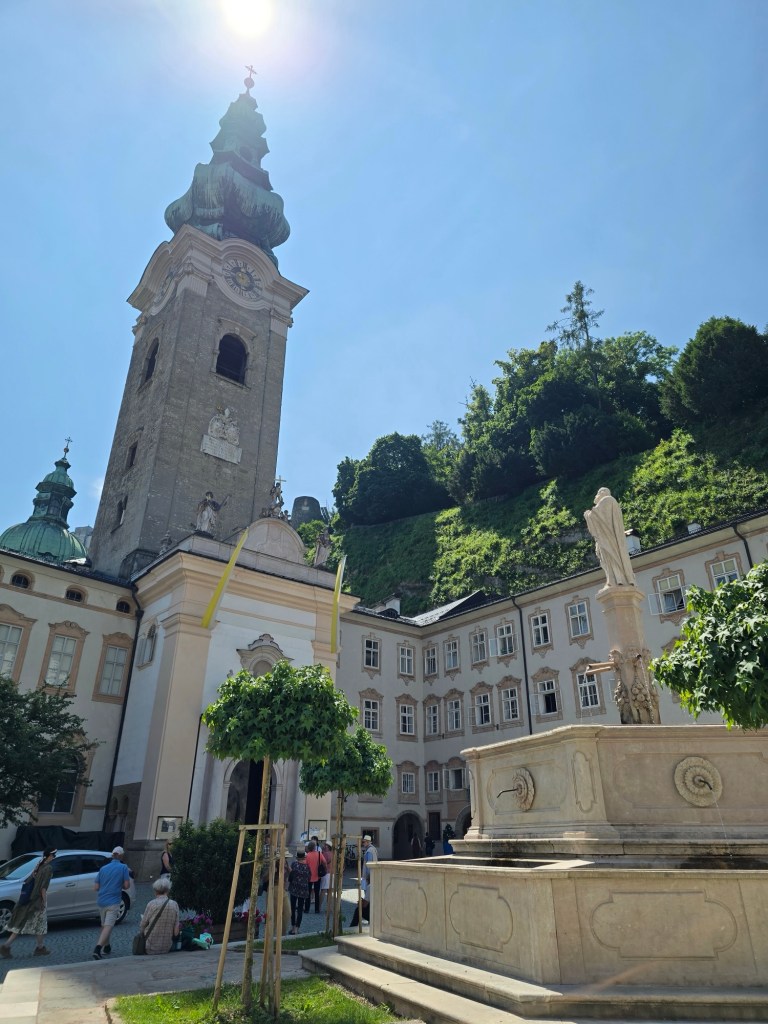
The walk eventually brought me toward the area of St. Peter’s Abbey.
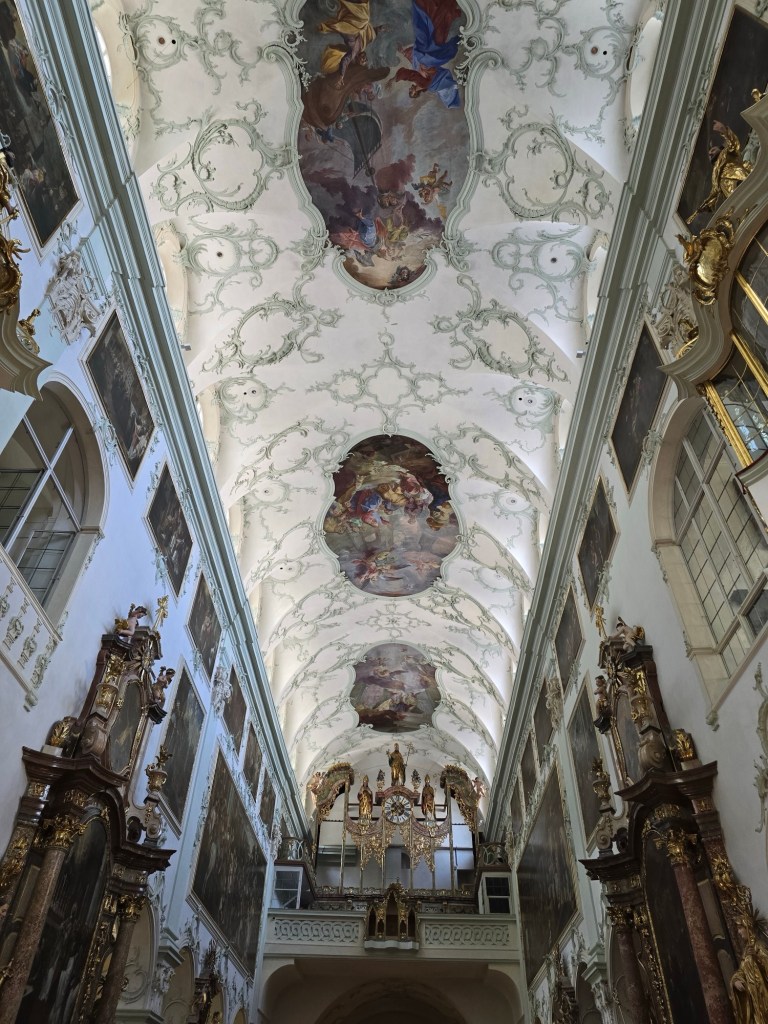
⛪ St. Peter’s Abbey — More Than 1,300 Years of History
Before continuing my walk, I passed by St. Peter’s Abbey, one of Salzburg’s most historically significant places.
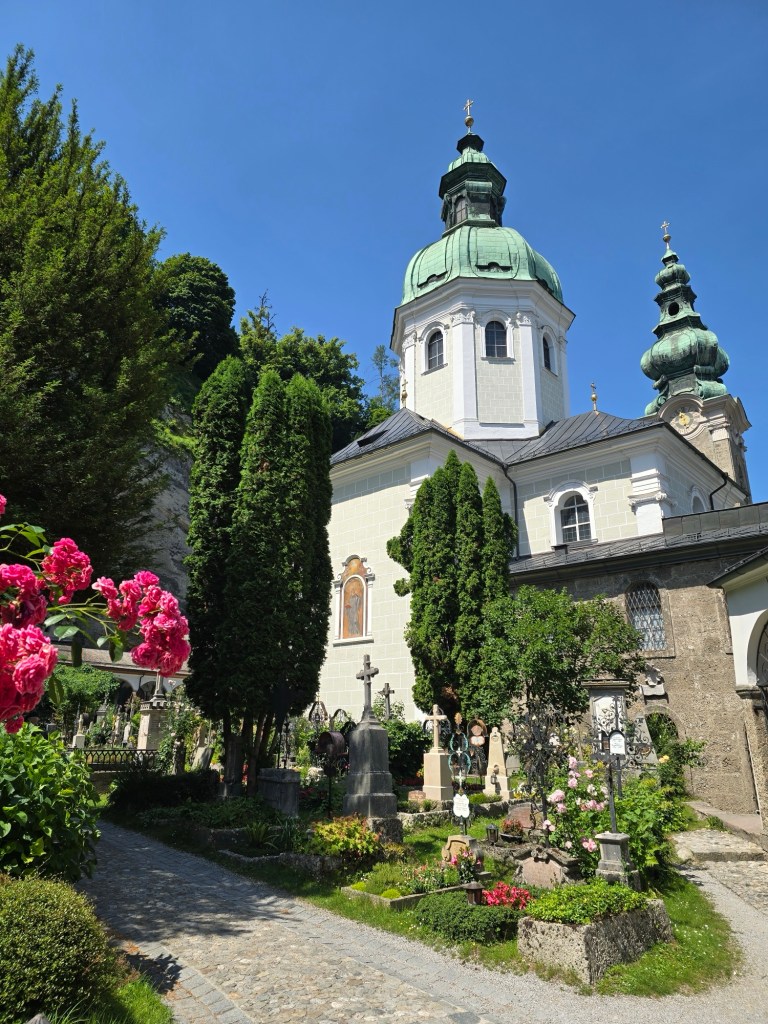
St. Peter’s Abbey was founded by Saint Rupert in 696, making it the oldest monastery in the German-speaking world with an unbroken tradition. Benedictine monks have lived and worked here for more than 1,300 years.
The complex includes the abbey church, cemetery, catacombs, and other historic buildings.
The cemetery itself is particularly atmospheric, with old tombstones, wrought-iron details, and the surrounding cliffs of the Mönchsberg.
It is one of those places where Salzburg’s history feels very close and tangible.
🥖 A Stop at Salzburg’s Oldest Bakery
Before continuing, I passed by the Stiftsbäckerei St. Peter, the historic bakery associated with the abbey.
This was definitely one of the more interesting stops along the route.
The bakery has written records dating back to the 12th century and is regarded as Salzburg’s oldest bakery. Its history is closely connected with the Almkanal, a historic water system that supplied the city. A mill was established here, and the water helped power the mill.
The traditional bakery is still known for bread baked in a wood-fired oven.
https://backpackersdiaries.com/2025/06/27/foodie-diaries-in-salzburg/
Even if you don’t stop for a snack, it is worth taking a moment to see this little piece of Salzburg’s living history.
🛍️ Walking Through Getreidegasse
From St. Peter’s, I continued toward one of Salzburg’s most famous streets — Getreidegasse.
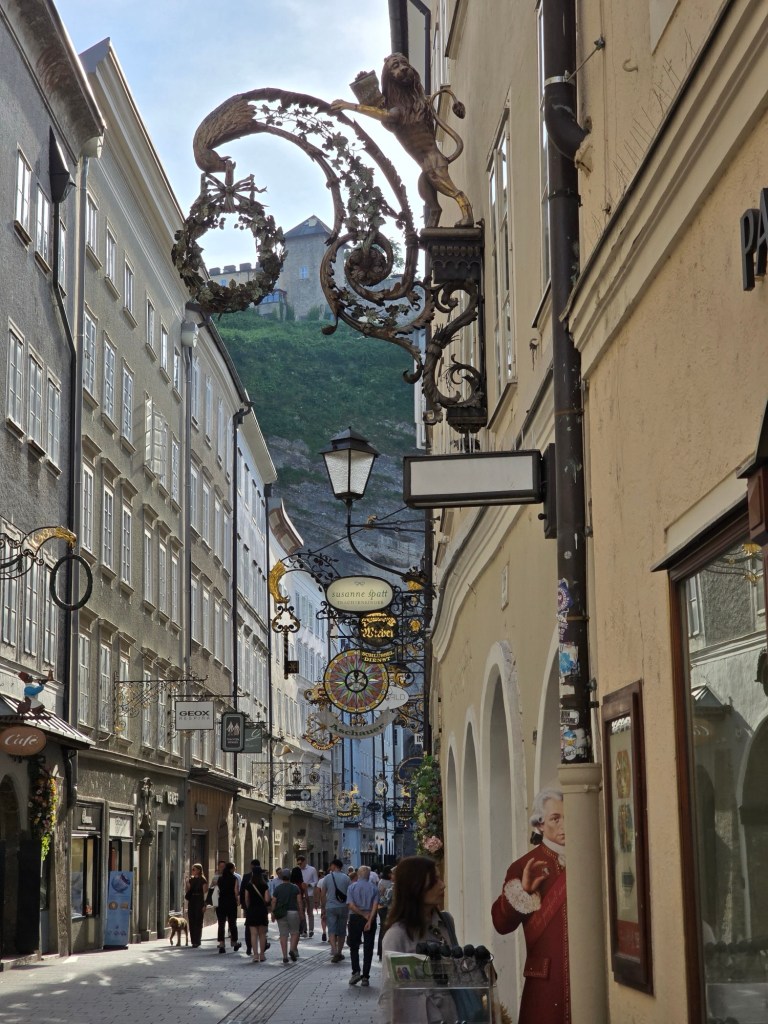
This is probably one of the streets you cannot miss when visiting Salzburg.
Getreidegasse is the heart of the Old Town and is famous for its historic buildings, traditional businesses, decorative guild signs, narrow passages and charming architecture.
One of the most recognizable features is the collection of ornate wrought-iron signs hanging above the shops.
The buildings themselves are also fascinating. Many have elegant doorways, while the windows become progressively smaller on the upper floors — a characteristic feature of Salzburg’s historic architecture.
And, of course, this is also where you will find Mozart’s Birthplace at Getreidegasse 9.
I walked through the busy street, taking in the atmosphere before stopping for lunch on the other side of the Old Town.
🌺 Mirabell Gardens
After lunch, I continued to Mirabell Gardens.
This is one of the most beautiful places in Salzburg for a relaxed walk.
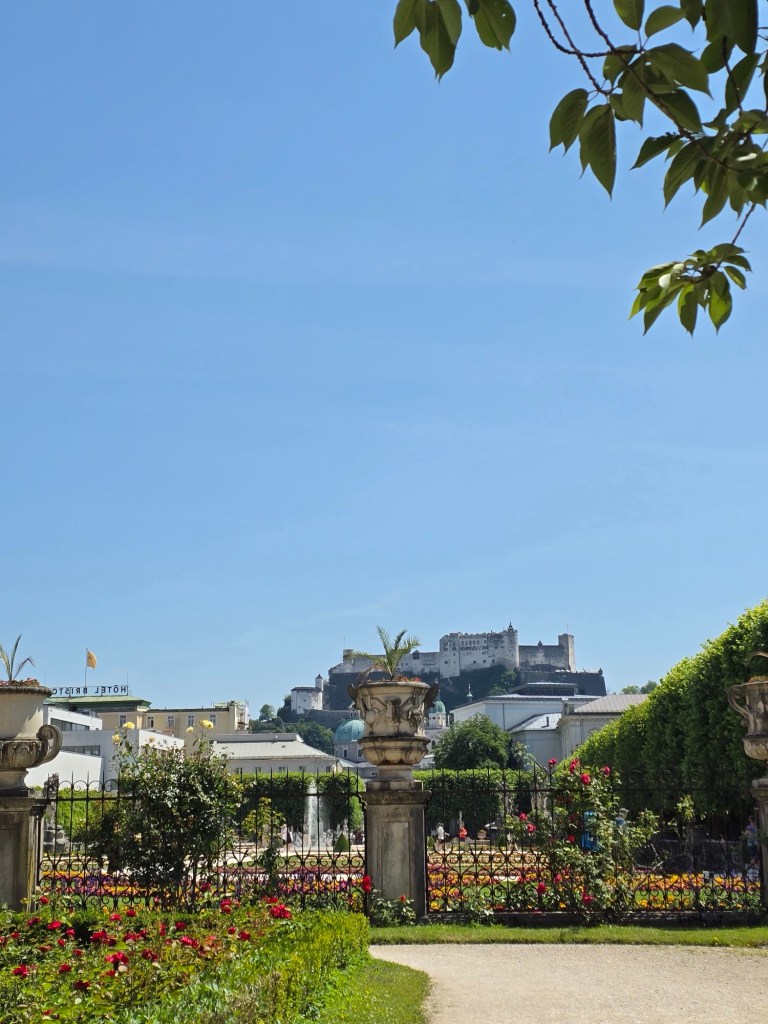
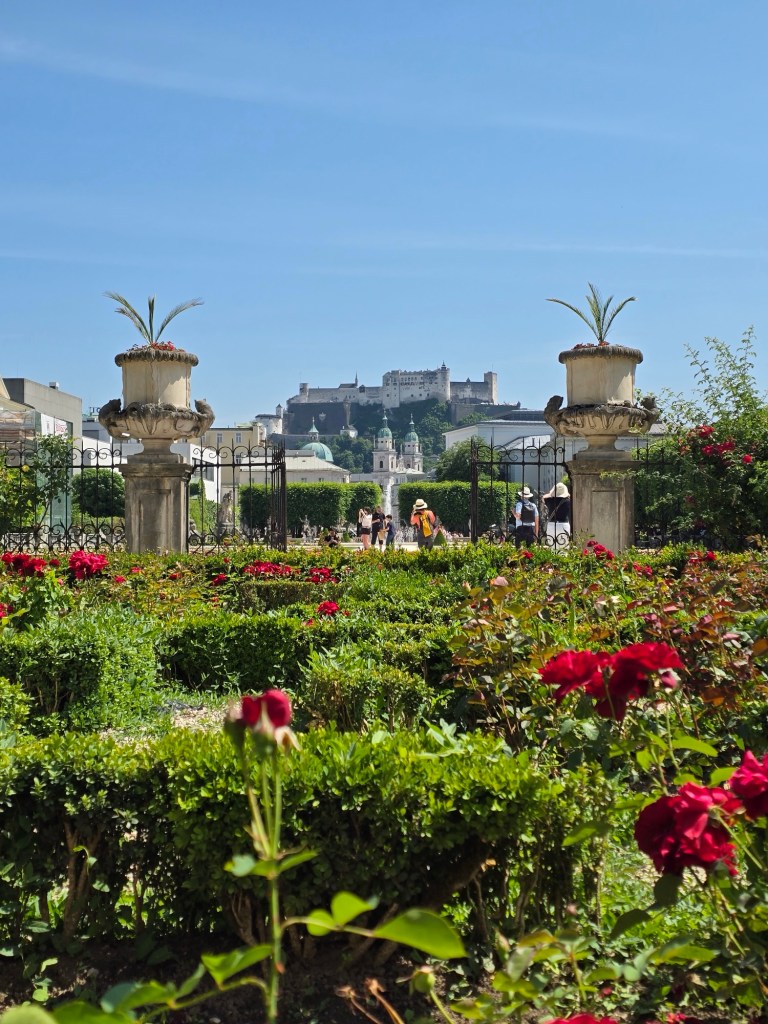
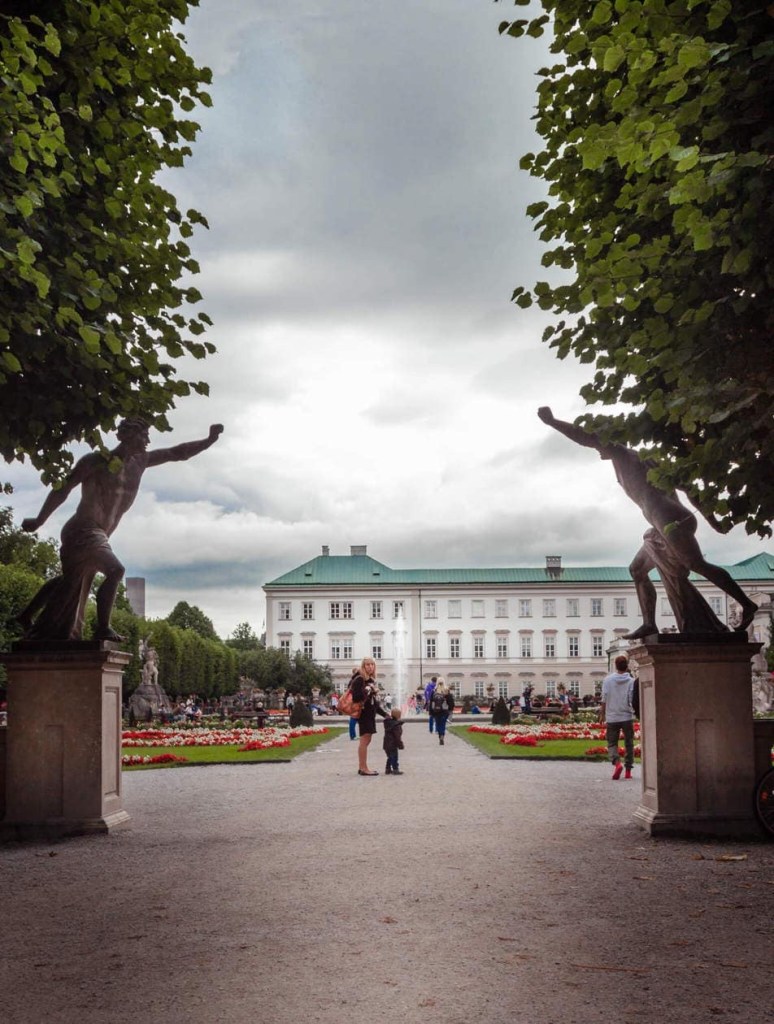
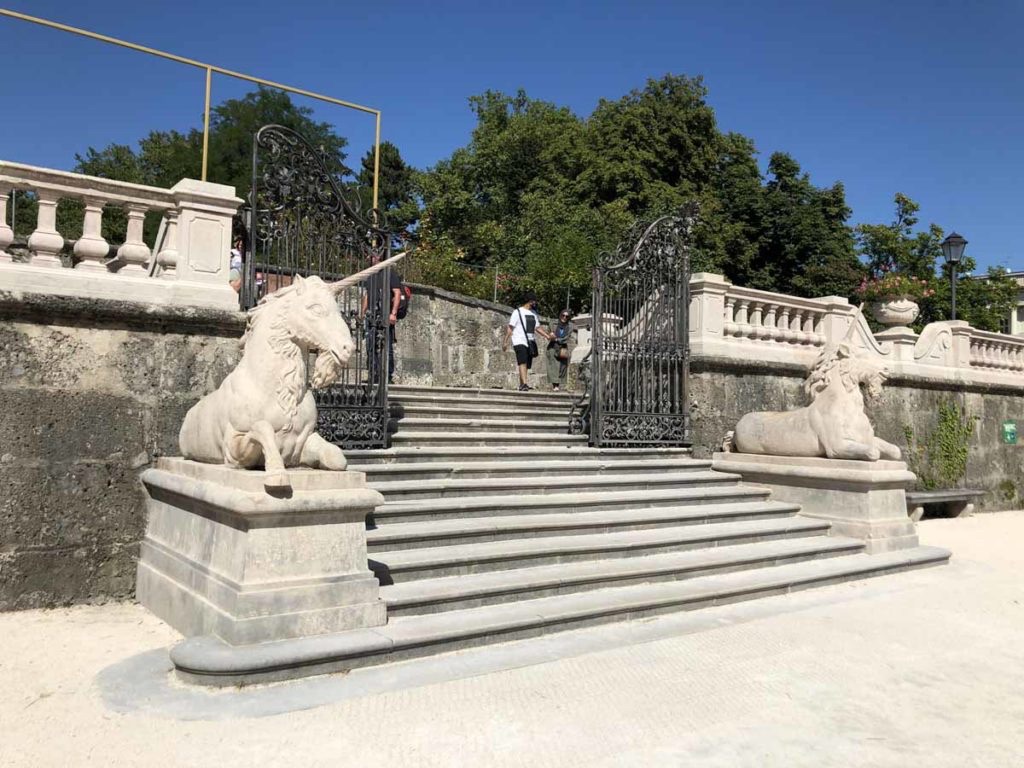
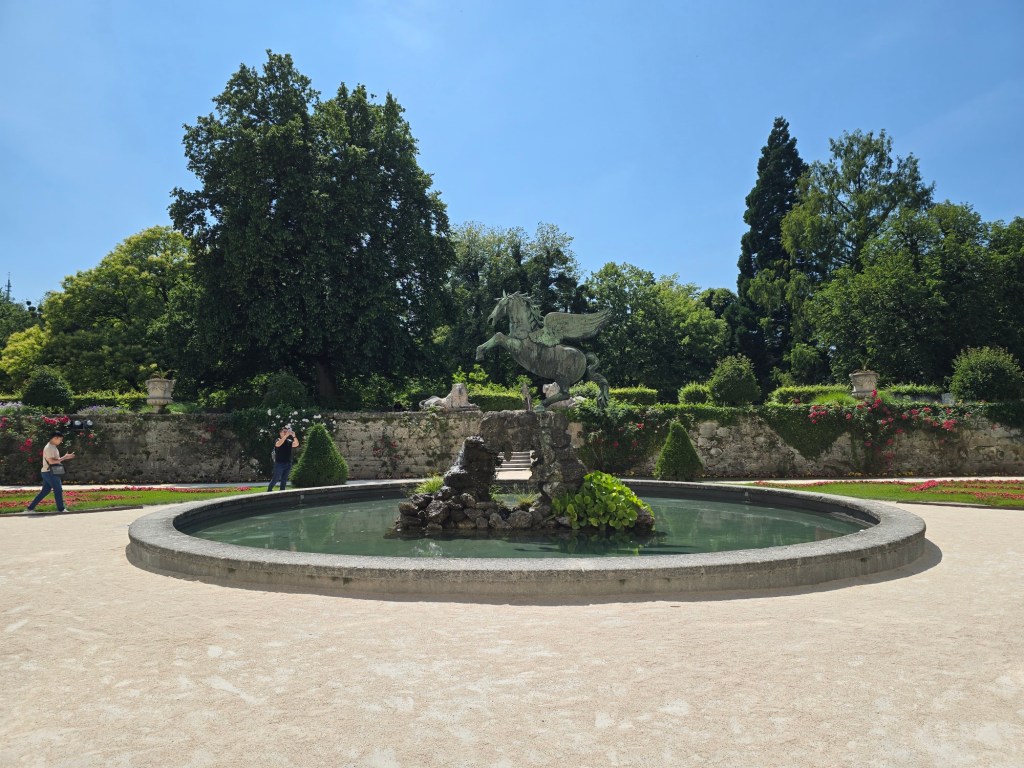
The gardens form part of the Mirabell Palace complex, which is protected as a historic monument and is included within Salzburg’s UNESCO World Heritage area.
The gardens are beautifully arranged with geometric flower beds, sculptures, fountains and manicured paths.
One of my favorite aspects was the classic view toward Salzburg Cathedral and Hohensalzburg Fortress.
It is one of those places where you can simply slow down, take photographs and enjoy the scenery.
❤️ Marko-Feingold-Steg — Salzburg’s Love-Lock Bridge
From Mirabell Gardens, I continued walking toward the Salzach River and reached Marko-Feingold-Steg.
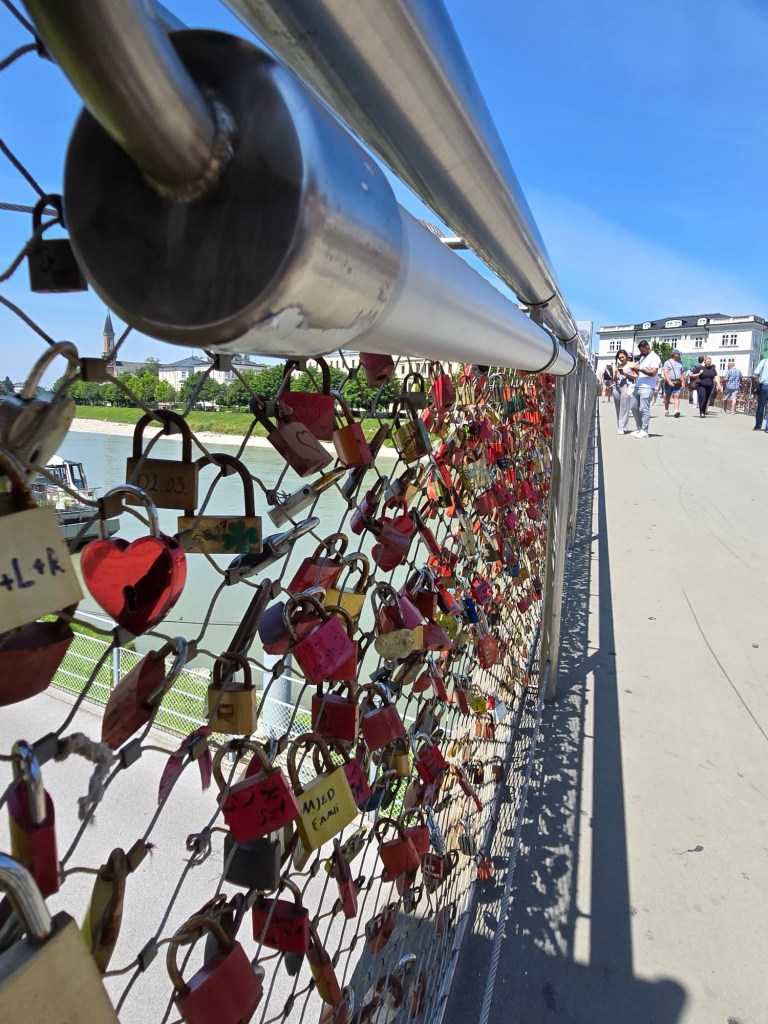
This pedestrian bridge has become famous for its thousands of love locks attached to the railings.
Couples place padlocks on the bridge as a symbol of their relationship, making the bridge one of Salzburg’s recognizable romantic spots. Salzburg Tourism even describes the love-lock tradition here as having developed into a local attraction.
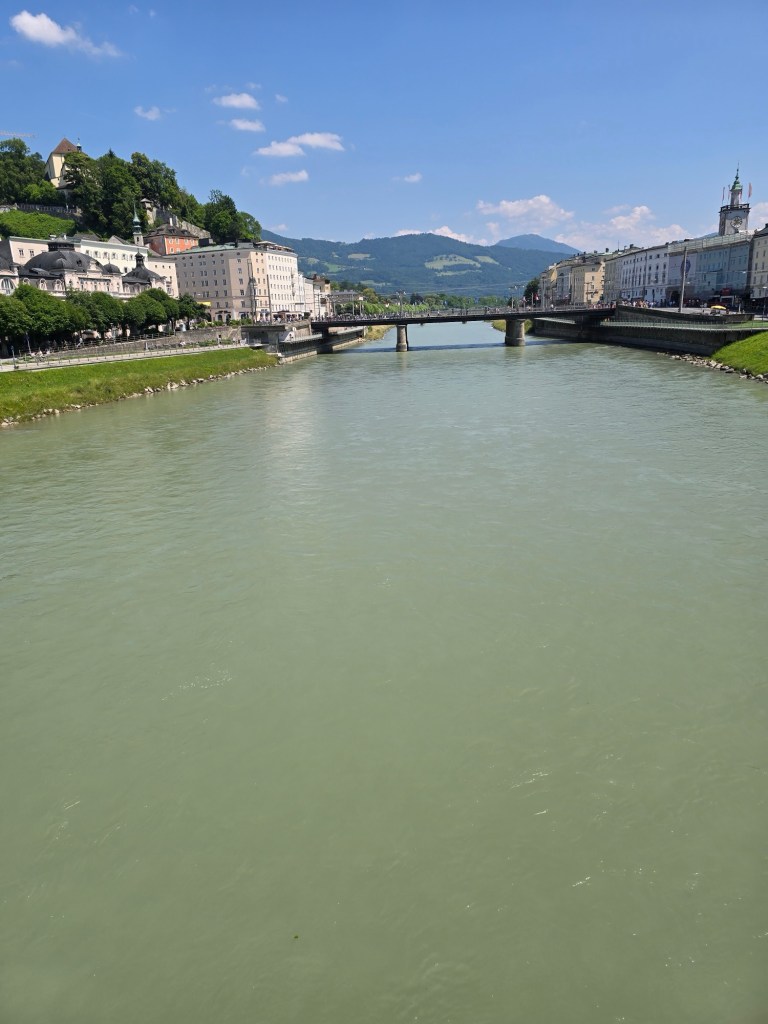
But beyond the love locks, I enjoyed the view from the bridge.
The Salzach River was calm, and from here I could appreciate Salzburg from another perspective — the historic buildings on one side and the mountains beyond them.
☕ Dinner at Café Mozart
By evening, I stopped at Café Mozart, located at Getreidegasse 22.
This traditional café is considered one of the oldest cafés in Salzburg when its earlier history is taken into account. The café received the name Café Mozart in 1922, and over the years it became a meeting place for writers, musicians and artists.
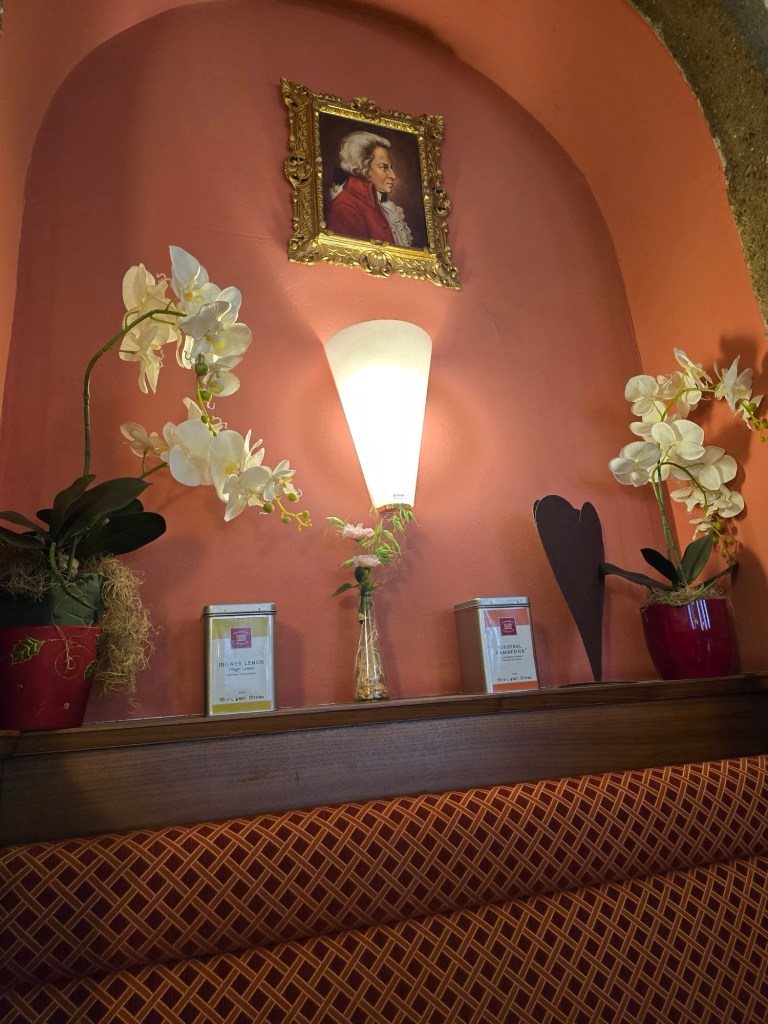
Today, it offers traditional Austrian coffeehouse culture, coffee specialties, pastries, Austrian desserts and dishes such as Salzburger Nockerl.
https://backpackersdiaries.com/2025/06/27/foodie-diaries-in-salzburg/
It was a nice place to end the day — enjoying dinner and the atmosphere of Salzburg’s historic Old Town.
After dinner, I called it a night and prepared for the next day’s adventure.
🏔️ Day 3: Untersberg Adventure
The following morning, I woke up early again.
This time, I was leaving the historic center behind and heading toward the mountains.
My destination was Untersberg.
I hopped on the bus toward the Untersbergbahn valley station at St. Leonhard.
🚠 Riding the Untersbergbahn
When I arrived, I took the Untersbergbahn cable car.
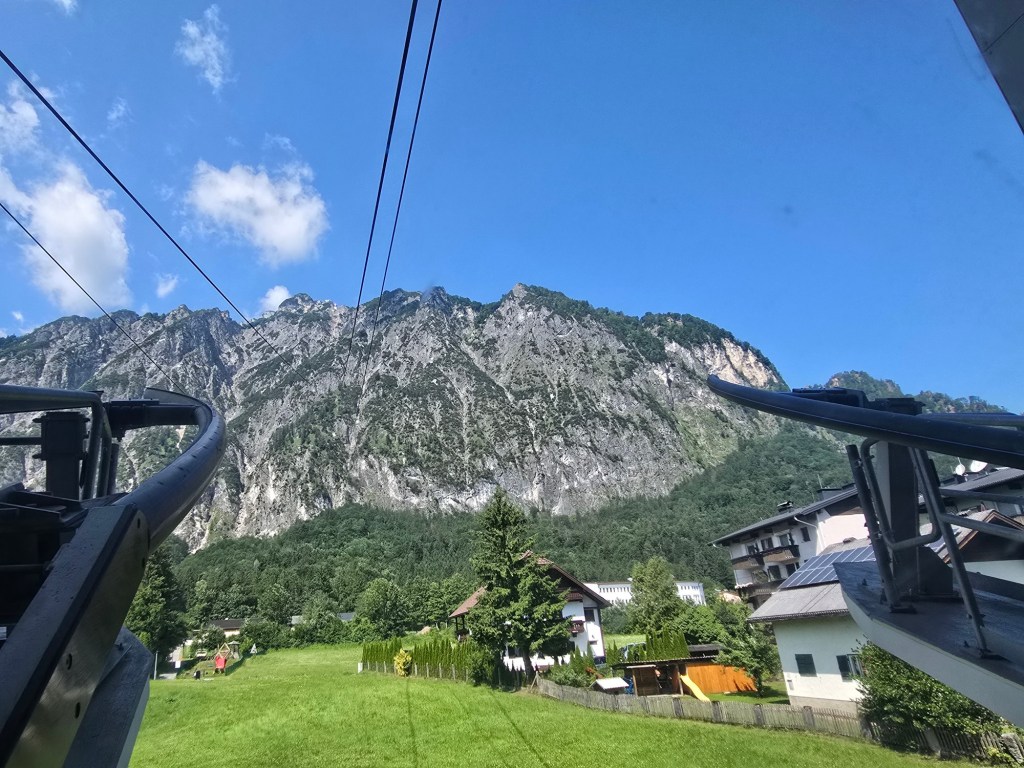
The cable car ride itself was already an adventure.
The valley gradually disappeared below me as the cabin climbed higher and higher. The landscape changed from the city and surrounding countryside to a much more rugged Alpine environment.
The cable car reaches the Geiereck upper station at approximately 1,776 meters above sea level, climbing around 1,320 meters in elevation from the valley station. The journey takes approximately 8.3 minutes.
As we climbed, the view became more impressive with every minute.
🥾 Hiking on Untersberg
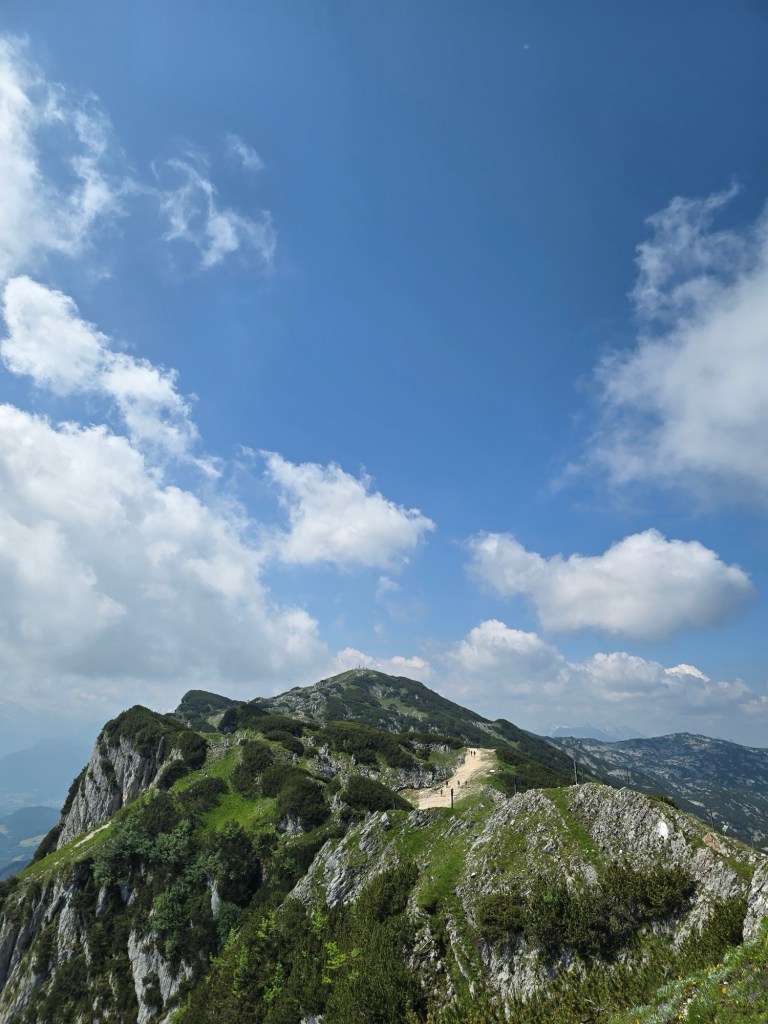
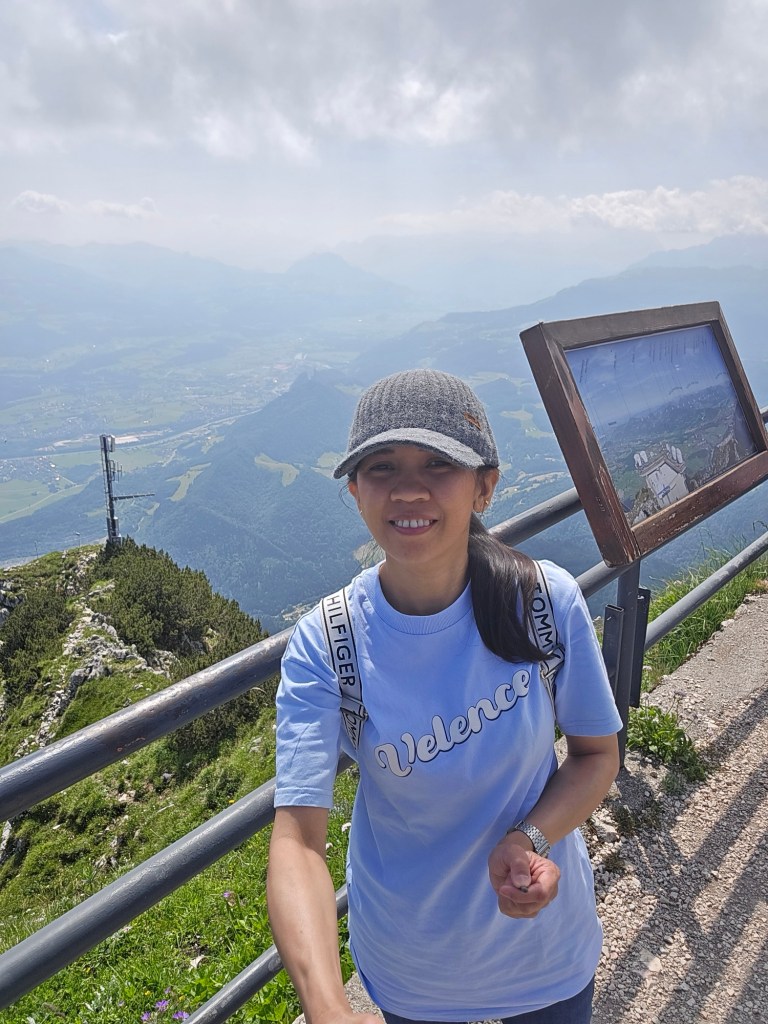
After reaching the top, I started walking toward the higher point of the mountain.
The hike itself wasn’t extremely long for me, but the experience was completely different from walking around Salzburg’s Old Town.
Up here, everything felt quieter.
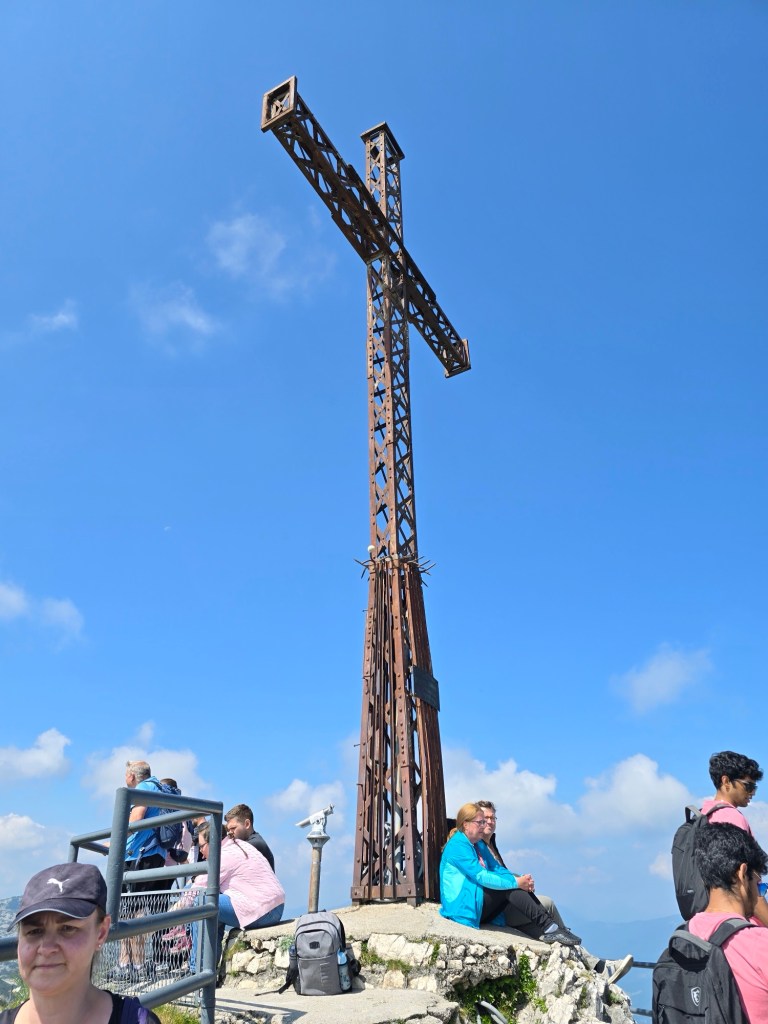
The air felt fresher and cooler. Instead of church towers and historic buildings, I was surrounded by rocks, Alpine scenery and enormous views.
With every step, I could feel that I was getting farther away from the busy city below.
The combination of the cable-car ride and the short hike made Untersberg one of the highlights of my Salzburg trip.
There are numerous hiking trails around the mountain, ranging from easier walks to more demanding Alpine routes. The cable-car operators recommend sturdy shoes and weather-appropriate clothing because mountain conditions can change quickly.
🎼 Back to Salzburg: Mozart’s Birthplace
In the afternoon, I returned to Salzburg’s Innenstadt.
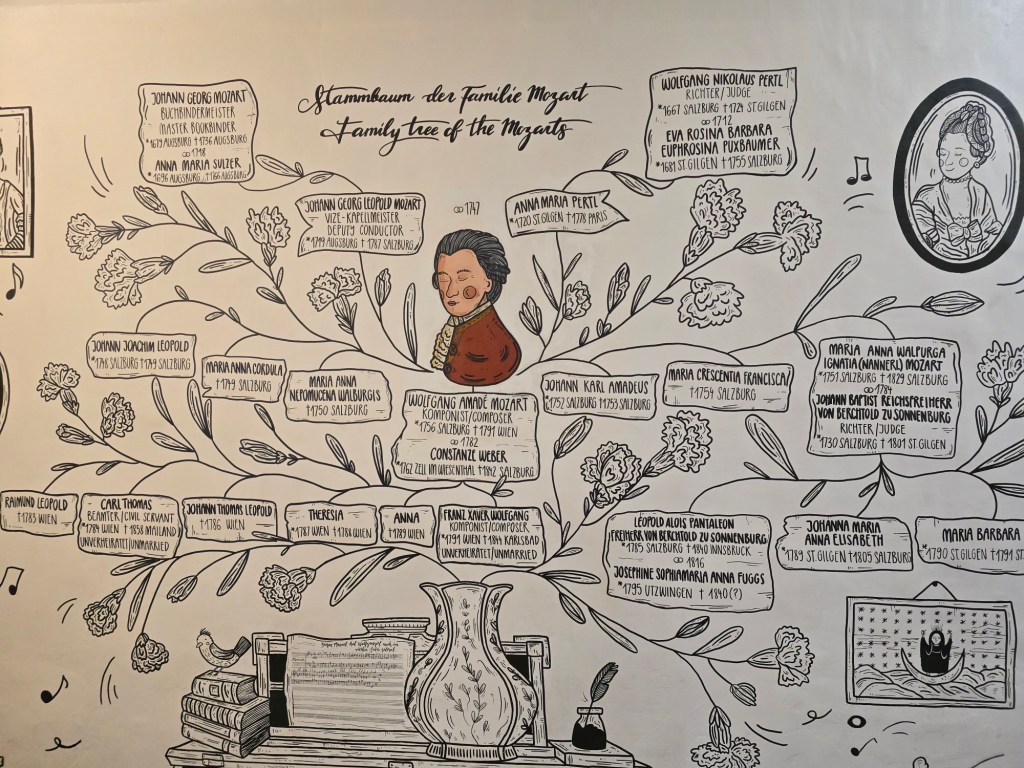
I headed back toward Getreidegasse, where I visited one of Salzburg’s most famous museums: Mozart’s Birthplace.
The museum occupies three floors and gives visitors an intimate look at Mozart’s early life.
Visiting the birthplace gives a completely different perspective on Mozart because you are not simply looking at his music — you are seeing the environment in which his life began.
The museum describes the birthplace as one of the world’s most visited museums and one of the places where Mozart’s personal story becomes particularly tangible.
🌊 One Last Walk Along the Salzach
This time, I wasn’t rushing.
I stopped on the bridge and looked at the Salzach River.
After two busy days of walking through Salzburg, visiting the fortress, exploring historic streets, seeing Mozart’s birthplace and even hiking in the mountains, this quiet moment by the river felt like the perfect way to end the trip.
I simply stood there for a while, watching the calm river flow through the city.
Then it was time to head back to Munich.
❤️ Final Thoughts: Salzburg Was More Than Just a City Trip
My Salzburg trip turned out to be much more than simply visiting another European city.
In just a few days, I experienced so many different sides of Salzburg.
I explored a 900-year-old fortress, walked through one of Europe’s most beautiful historic centers, visited an abbey that has stood for more than 1,300 years, discovered one of Salzburg’s oldest bakeries, wandered through the famous Getreidegasse, relaxed in Mirabell Gardens, crossed a bridge covered with love locks, visited Mozart’s birthplace and even escaped into the Alps at Untersberg.
What I loved most was the contrast.
One moment I was walking through narrow medieval streets surrounded by Baroque architecture, and the next I was high in the mountains surrounded by Alpine scenery.
Salzburg gave me history, culture, music, nature and beautiful views — all within a relatively small area.
And sometimes, the best memories aren’t the famous attractions.
Sometimes, they are simply standing beside a quiet river at the end of the day, looking back at everything you experienced.
Until the next adventure, Salzburg. 🇦🇹❤️
📌 Salzburg Travel Tips
🚆 Getting there:
Munich Hauptbahnhof to Salzburg Hauptbahnhof is a convenient rail journey. Check the current conditions of your Deutschland-Ticket and the specific train before traveling internationally.
🚌 Getting around:
The Salzburg Guest Mobility Ticket provides overnight guests with free public transportation throughout the province of Salzburg during their stay.
🎟️ Salzburg Card:
The 24-hour Salzburg Card can be worthwhile if you plan to visit several paid attractions. It includes one-time free admission to numerous attractions and museums and includes the Fortress funicular.
🏰 Hohensalzburg Fortress:
Don’t just explore the interior — make time for the Panorama Tour and observation areas for the best views.
🥾 Untersberg:
Wear proper walking or hiking shoes and check the mountain weather before going. Conditions can change quickly at altitude.
📸 Best photo spots:
Hohensalzburg Fortress, Mirabell Gardens, Getreidegasse, Marko-Feingold-Steg and the Salzach riverside are all excellent places for photographs.
Thebackpackdiaries now signing off….See you next to the where thebackpackdiaries go…


Leave a Reply